
Wild Position

So I’m playing through the game Kezin-Artemiev from the 2023 World Rapid in Samarkand.
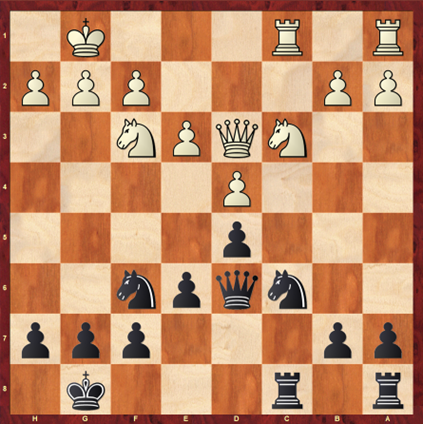
As a long-time Slav player, and a longer time Artemiev fan (I started actively following his career when he was still sub 2600), I was playing through this game, and I reached this position:
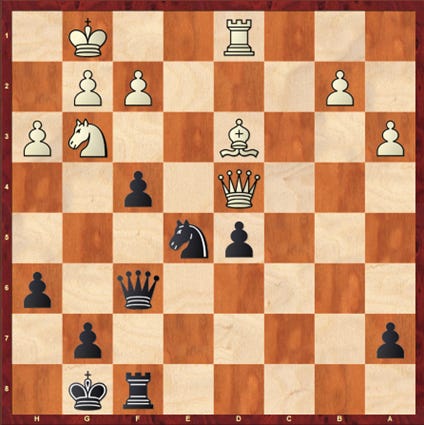
Here I see something I’m not sure I have ever seen before, and that is that the potential for a double queen discovery - heck, I don’t even know what to call it for sure - is on the board.
In the above position, the following possibility exists:
30…Nf3+ 31.gxf3 Qxd4 32.Bh7+ Kxh7 33.Rxd4, and both queens have fallen to discovered attacks.
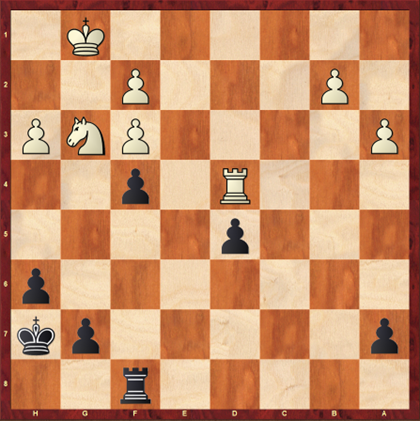
This is reason enough to play through a “random” game. In this case, selected since it’s in an opening I play.
There are also other interesting moments to be found in most games played at a reasonably high level. Here is one from this game.
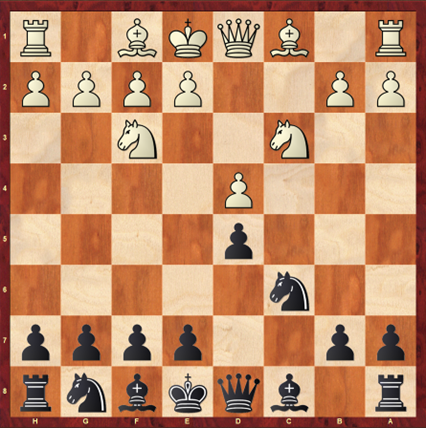
Here, the move 5…Nf6 is played nearly 162 times more often (9,698 to 60 in my database), yet Artemiev plays 5…e6.
In the above position, one extremely common way to play this line continues with 5…Nf6 6.Bf4 Bf5 7.e3 e6
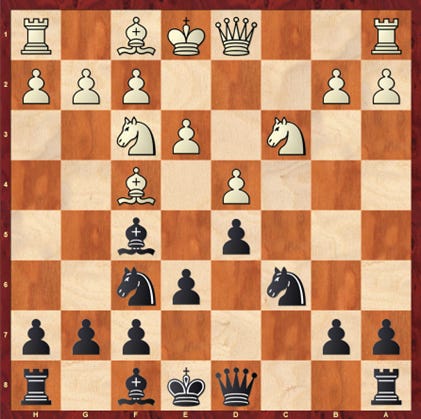
Here play will continue with 8.Bd3 Bxd3 9.Qxd3 Bd6 10.Bxd6 Qxd6 11.0-0 0-0 12.Rfc1 Rfc8
And here, a draw you will often see is 13.Ne2 Ne7 14.Nc3 Nc6 etc.
Yet in the Artemiev game, 5…e6 was played, and after 6.Bf4 Bd6 7.Bxd6 Qxd6 8.e3 it’s easy to see that one main difference is that Black’s sole surviving bishop is his bad bishop.
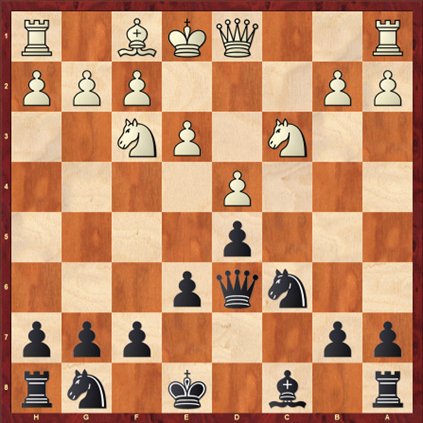
Nevertheless, a top player at this time control decided to intentionally play down this lightly trodden path. I’d like to understand what Black thinks they are getting in the line Artemiev chose.
Maybe it’s just shock value.
Work continues.
Til next time,
Chris Wainscott
Actually, White has one bishop, not a bishop pair 😅